
Renovation finished. The contractors have packed up. Your new cabinets are in, the floors finally look the way you imagined, and you are probably already thinking about furniture delivery and moving day.
But there is one important step in between: post-renovation cleaning.
Get the timing wrong, and you may end up cleaning twice, trapping renovation dust behind new furniture, or moving your belongings into a home that still has fine dust settling across its surfaces.
Key Takeaways
- Schedule post-renovation cleaning only after all hacking, drilling, sanding, painting, carpentry, and rectification work is complete, so the home is not made dusty again after the main clean.
- Allow around 48 hours after the final dusty work before the main clean, giving disturbed particles time to settle while the property is still mostly empty and easy for cleaners to access.
- Complete built-in installations before cleaning, but bring in loose furniture, mattresses, rugs, and personal belongings afterwards so floors, corners, tracks, and cabinets remain accessible.
- Treat cleaning and moving in as separate stages, especially after heavier renovation work, as ventilation, curing times, and household needs may affect when the home is ready to occupy.
- For HDB and condo homes, confirm the final dusty work, defect rectification, and delivery or lift-booking schedule before fixing the cleaning date to avoid unnecessary re-cleaning.
When Should Post-Renovation Cleaning Be Done?
The best window sits between the contractor finishing the home and you starting to furnish it. Think of post-renovation cleaning as part of the renovation handover process rather than something you arrange after moving in.
Before booking the cleaners, check that:
- Hacking and drilling have stopped.
- Carpentry installation is complete.
- Tiles, flooring, and sanitary fittings are installed.
- Electrical and lighting work is complete.
- Painting and touch-ups are finished.
- Major defect rectification has been completed.
- Contractors have removed their tools and renovation debris.
- Any surfaces that require drying or curing are ready to be cleaned according to the installer’s or product instructions.
If your contractor says, “We just need to come back tomorrow to drill two more shelves,” it is usually better to wait. Even a short drilling job can put fine dust back onto surfaces that were just cleaned.
The simple rule is: the last dusty job should happen before the main post-renovation clean, not after it.
Should You Do Post-Renovation Cleaning Before or After Furniture Delivery?
Before furniture delivery is usually better. An empty home gives cleaners access to places where renovation dust naturally collects, including floor edges, skirting boards, window tracks, cabinet interiors, corners, electrical fittings, and areas around built-in carpentry.
Once sofas, dining tables, beds, mattresses, storage boxes, and other large items arrive, sections of the floor become inaccessible. Delivery and furniture assembly can also introduce cardboard fibres, packaging material, outdoor dirt, and additional foot traffic.
Built-In Items Should Already Be Installed
Kitchen cabinets, wardrobes, bathroom fittings, fixed shelving, lighting, countertops, and other permanent renovation elements should normally be completed before the main clean. Installing them can involve drilling, sawing, cutting, adhesives, packaging, and other work that creates additional residue.
Loose Furniture Should Usually Come Later
Sofas, beds, mattresses, dining furniture, rugs, curtains, freestanding storage, and boxes of personal belongings are better brought in after the main post-renovation clean wherever possible.
If installing it creates dust, install it before cleaning. If it mainly occupies space, bring it in after cleaning.
Book your clean between handover and furniture delivery
The Ideal Post-Renovation Cleaning Timeline
There is no single timeline that applies to every renovation. A full-home overhaul involving hacking and tiling is different from repainting one bedroom, so the following windows should be treated as planning guidance rather than strict rules.
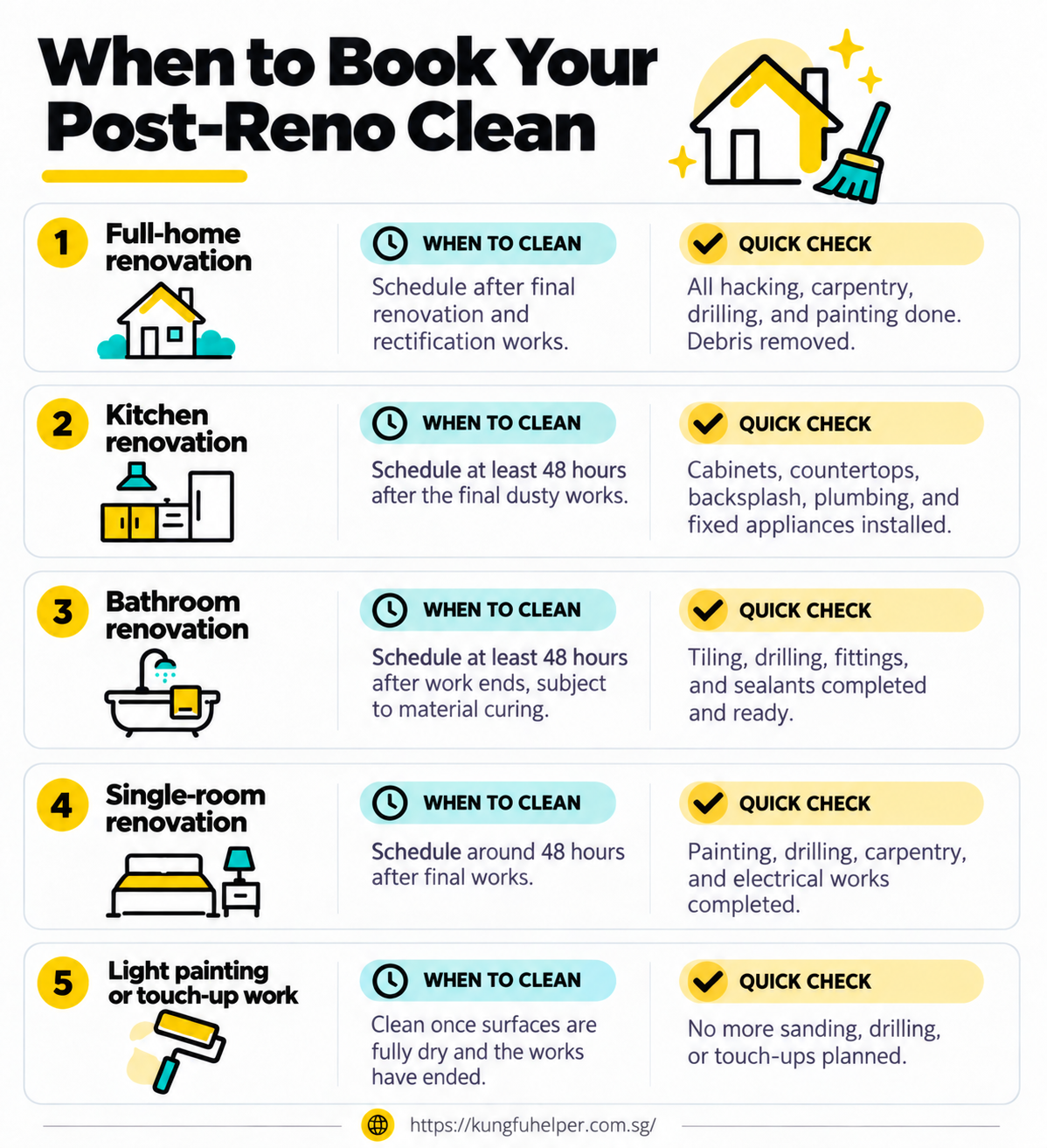
KungFu Helper’s current post-renovation booking guidance also uses at least 48 hours after renovation completion as its cleaning benchmark, allowing much of the disturbed dust time to settle.
That 48-hour period is a planning guideline, not a universal drying or curing rule. Different materials have different requirements, so the contractor’s and manufacturer’s instructions still take priority.
A Practical Timeline After a Full-Home Renovation
-
Step 1: Complete the Final Contractor Walkthrough
Inspect the home before arranging the main clean. If any drilling, sanding, repainting, cutting, replacement, or carpentry adjustment is still pending, complete that work first.
-
Step 2: Complete Rectification, Then Allow the Home to Settle
Finish the remaining dusty jobs, then leave the property relatively undisturbed and ventilate it where practical. NEA guidance identifies ventilation as one measure for managing indoor pollutants and particulate matter.
-
Step 3: Complete the Main Post-Renovation Clean
With contractors gone and loose furniture still outside the property, the main clean can focus on renovation dust and residue across floors, cabinet interiors, ledges, window tracks, fittings, and other affected surfaces.
-
Step 4: Arrange Furniture and Appliance Deliveries
Once the main clean is finished, furniture and appliance deliveries can begin. Grouping deliveries into a shorter period can help reduce repeated foot traffic, packaging, cardboard, and dirt entering the freshly cleaned home.
-
Step 5: Do a Light Final Clean Before Moving In
After furniture assembly and deliveries, a light vacuum, wipe, and mop will usually handle packaging dust, footprints, cardboard fibres, and ordinary moving-day dirt. The renovation residue should already have been addressed during the main clean. This lighter clean is also a good fit for a part-time helper, who can return on a recurring schedule to keep the home in order once you have settled in.
Post-Renovation Cleaning for Kitchens and Bathrooms
Kitchen and bathroom renovations can involve tile cutting, drilling, carpentry, countertop installation, grout, sealants, plumbing, and electrical work. In these areas, it is best to wait until all installation and dusty work is complete before cleaning.
For kitchens, this means waiting until the cabinetry, countertops, backsplash, sink, lighting, and other fixed installations are finished. For bathrooms, make sure tiling, fittings, grout, sealants, and coatings have been completed and are ready for cleaning.
Clean cabinets and surrounding surfaces before filling them with plates, cookware, food, toiletries, and other belongings.
What If Only One Room Was Renovated?
The same sequence still applies on a smaller scale. Finish all dusty work, allow the room to settle, clean the renovated area and any nearby spaces affected by dust, then return furniture and belongings.
Fine particles can travel through doorways, corridors, and air-conditioning systems, so do not assume all renovation dust stayed inside the room. Where practical, separating the renovation zone from occupied areas during the works can help limit how far it spreads.
Singapore Factors That Can Affect Your Cleaning Date
In Singapore, renovation rules, defect rectification, and building access arrangements can affect when you should schedule the main clean.
- For HDB homeowners, including those with new BTO flats, renovation restrictions can affect when the final drilling, cutting, or other dusty work is completed. Instead of planning around the expected handover date, confirm the last day of dusty renovation work before scheduling your clean. Where possible, complete any necessary defect rectification before the main post-renovation clean as well. For new flats, HDB’s one-year Defects Liability Period applies from key collection, and HDB advises reporting defects before renovation begins where possible.
- For condominium residents, check service-lift availability, delivery hours, and building access rules before fixing your cleaning date. Ideally, the main clean should happen shortly before furniture and appliances are delivered.
Why Timing Matters for Post-Renovation Cleaning
Cleaning too early can mean doing the job twice. If contractors return to drill, sand, repaint, or make final adjustments, dust can quickly settle on freshly cleaned surfaces.
Cleaning while contractors are still working in the unit, or while renovation debris and leftover materials remain, causes a similar problem. Tools, offcuts, and discarded packaging restrict cleaners’ access to floors, corners, and fixtures, so some areas cannot be reached properly and the overall cleaning result is affected.
Waiting too long creates a different problem. Once furniture, boxes, and belongings are moved in, dust becomes harder to reach, and some residue may be more difficult to remove from surfaces.
The best approach is to clean after all dusty renovation and rectification work is complete, but before the home is fully furnished and occupied.
What Happens If You Move In Before Post-Renovation Cleaning?
Moving in before the main post-renovation clean makes the job harder because furniture, boxes, and belongings block access to floors, corners, cabinets, and other areas where dust settles.
Everyday activity can also redistribute remaining dust onto belongings and soft furnishings. Cleaning before the home is fully occupied reduces the need to move items, wipe surfaces repeatedly, or clean around furniture later.
How Far in Advance Should You Book Post-Renovation Cleaning?
You do not need to wait until renovation is completely finished before contacting a cleaning company. Once your contractor can give you a reasonably reliable completion date, you can start planning the cleaning slot around your furniture delivery and intended move-in dates.
Before confirming the appointment, have the following details ready:
- Property size and property type.
- Whether the renovation was full or partial.
- The main types of renovation work completed.
- Expected renovation completion date.
- Furniture delivery date.
- Intended move-in date.
The actual cleaning appointment should still fall after the final dusty renovation work rather than simply following the contractor’s original projected handover date.
Budget may also be part of the planning. KungFu Helper currently prices post-renovation cleaning by floor area, with published rates starting from S$288 before promotional discounts. Most standard post-renovation jobs are listed as taking around three to four hours, depending on the property and scope.
Planning the clean before furniture and belongings move in also gives cleaners better access to dust, residue, and harder-to-reach areas. It can make the final stages of moving in simpler and reduce the need for repeated cleaning afterwards.
Just Finished Your Renovation? Don’t Wait
The window between contractor handover and furniture delivery is usually the easiest time to deal with renovation dust and residue thoroughly.
KungFu Helper’s post-renovation cleaning service is designed for homes after full or partial renovation, with a structured cleaning process and a final walkthrough before completion.
Frequently Asked Questions
How long after renovation should I do post-renovation cleaning?
Wait until every dusty task is finished, then allow around 48 hours before the main clean. The key rule is that no drilling, sanding, carpentry, or rectification work should be scheduled after the cleaners leave.
Should I clean before or after furniture delivery?
Before, wherever possible. Permanent built-ins should already be installed, but sofas, mattresses, dining furniture, and personal belongings are better moved in afterwards, once cleaners have reached the floor edges, skirting boards, cabinet interiors, and other areas those items would block.
Can I do post-renovation cleaning on the same day the contractor finishes?
It is usually better not to. A same-day clean leaves little time for disturbed dust to settle and gives you no margin for last-minute rectification. Confirm that the final dusty work is genuinely finished first.
Should post-renovation cleaning be done before moving in?
Yes. An empty property is easier to clean thoroughly, and cleaning first reduces the chance of renovation dust transferring onto mattresses, clothing, soft furnishings, and stored belongings.
Do I need another cleaning after furniture delivery?
Usually, only a light one. Delivery and assembly introduce cardboard fibres, packaging dust, and ordinary outdoor dirt, so a final vacuum, wipe, and mop before move-in is normally enough if the renovation residue was already handled during the main clean.
Does a BTO flat require a different cleaning timeline?
The cleaning sequence is similar, but defect rectification adds another consideration. Where possible, complete necessary HDB rectification before the main renovation and cleaning sequence, so contractors do not have to return for dusty repairs afterwards.
Book a Post-Renovation Cleaning with KungFu Helper
Trained, background-checked crews, published rates by floor area, and a final walkthrough before completion.
Get a Quote
WhatsApp us on +65 8778 7373 or visit kungfuhelper.com.sg for a rate based on your floor area.
Confirm Booking
Share your property size, renovation completion date, furniture delivery date, and intended move-in date so we can place the clean after the final dusty work.
About KungFu Helper
KungFu Helper is a Singapore home services company established in 2017, at 70 Shenton Way, EON Shenton #01-06, Singapore 079118. We specialise in post-renovation cleaning, house cleaning, move-in and move-out cleaning, and part-time helper services. We hold a 4.8-star Google rating, and our cleaning crews are trained and background-checked.
- HDB, Rectification of Defects in New Flats. hdb.gov.sg
- HDB, Important Information on Renovations. hdb.gov.sg
- NEA, Updated Guidance on Improving Ventilation and Indoor Air Quality in Buildings. nea.gov.sg
- NEA, Suggested Measures to Address Indoor Air Quality Issues. nea.gov.sg
- KungFu Helper, Post-Renovation Cleaning Service. kungfuhelper.com.sg
Disclaimer: This article is general planning information. Drying and curing times vary by material, so your contractor's and manufacturer's instructions take priority over the timelines described here. Pricing shown is KungFu Helper's published rate card as of October 2026 and is subject to change. HDB rules summarised here are for general guidance only; refer to HDB for current requirements. Last updated: October 2026.